Go Back
Crumbling Foundations in CT: A Buyer's Guide
Pyrrhotite-related crumbling foundations have impacted homes across north-central Connecticut. Here is what every buyer needs to check.

Jim Angell, CMI®
Jun 01, 2026
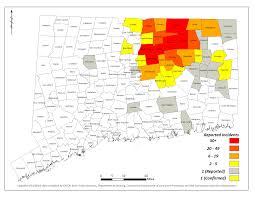
Crumbling foundations in Connecticut are caused by pyrrhotite, a mineral found in concrete aggregate from a quarry in Willington that was used in pours from roughly 1983 through 2016. Affected homes show horizontal and map-pattern cracks, white efflorescence, and bowing walls. If your home is in Tolland, Hartford, Windham, or New London County, get a Connecticut-Certified Crumbling Foundations inspection before you buy. Repairs cost $150,000 to $300,000, and the state's CFSIC program offers financial assistance.
A crumbling foundation in Connecticut isn't your typical settling crack. It's a chemical reaction that destroys concrete from the inside out. The aggregate used in many basements poured between the early 1980s and mid-2010s contained pyrrhotite, an iron sulfide mineral. When pyrrhotite meets water and oxygen, it slowly converts into other minerals that expand. That expansion turns solid concrete into a network of fractures.
Once the reaction starts, you can't stop it. You can only replace the foundation. That's why a thorough crumbling foundation inspection in CT matters so much before you sign a purchase contract.
I'm a Connecticut-Certified Crumbling Foundations Inspector, and I've walked through hundreds of basements across Stafford, Tolland, Ellington, Somers, Windham, and the surrounding towns. The damage is unmistakable once you've seen it a few times.
The affected concrete originated from a single quarry in Willington, Connecticut, owned by JJ Mottes. Homes built or with foundations poured from that source are most heavily concentrated in:
If you're buying in any of these towns, this needs to be on your inspection checklist. Period.
Pyrrhotite damage follows a predictable pattern. During an inspection, I'm looking for:
The concrete develops a network of intersecting cracks that looks like a road map or spider web. This is the most telling sign. Hairline cracks at first, then opening over time.
Long, roughly horizontal cracks running along the foundation walls, often a few feet up from the floor. These are different from the vertical settling cracks you see in normal foundations.
White, powdery deposits on the surface. This shows up as moisture moves through the failing concrete and brings minerals to the surface.
As the reaction progresses, walls bow inward or push outward. A 4-foot level held against the wall makes this obvious.
Small chunks of concrete pop off the surface, leaving shallow craters. You'll see small pieces on the basement floor.
Where walls meet the floor or where utilities penetrate, the concrete starts crumbling and flaking. You can sometimes scrape it away with your hand.
If you see any of these signs, don't panic, but do act quickly. Here's the process:
Replacing a crumbling foundation in Connecticut runs roughly $150,000 to $300,000 depending on home size, basement depth, and access. CFSIC has provided assistance to thousands of CT homeowners since the program started, with reimbursements covering a substantial portion of the replacement cost for qualifying homes.
If you're buying, this matters in two ways. First, you might be inheriting a problem that hasn't been disclosed. Second, if the home has already been replaced, you should be reviewing the documentation, warranty, and any remaining CFSIC benefits.
Not always. If the foundation has already been professionally replaced and you have the documentation, the home is essentially fixed. If the damage is early and the seller is willing to negotiate or has CFSIC eligibility documented, there are paths forward. If the damage is advanced and there's no plan in place, that's a much harder conversation. Either way, you need to know what you're getting into before you commit.
A visual inspection by a Connecticut-Certified Crumbling Foundations Inspector is the first step. Map cracking, horizontal cracks, and bowing walls are the strongest signals. Core sample testing confirms it chemically.
Concrete pours from approximately 1983 through 2016 are at risk if the aggregate came from the Willington quarry. Homes built outside this window can still have other foundation issues, but pyrrhotite specifically falls in this date range.
Yes. The Connecticut Foundation Solutions Indemnity Company (CFSIC) provides financial assistance to qualifying homeowners. You'll need a Tier I visual inspection report to apply.
A standalone crumbling foundation inspection typically runs $300 to $600 depending on whether it's bundled with a full home inspection. For homes in the affected counties, this is one of the highest-value inspections you can get.
In most cases, no. Standard policies in CT exclude this type of damage. CFSIC and any seller-funded escrow are typically the path to repair.
If you're buying or own a home in north-central Connecticut, don't skip this inspection. Call Jim Angell at (860) 402-6644 or email angellhomeinspection@gmail.com. As a Connecticut-Certified Crumbling Foundations Inspector with CMI® credentials, I'll give you a complete report and the documentation you need for any state programs. Same-day digital report, $25,000 InterNACHI Honor Guarantee.

Angell Home Inspection Services is just a click or phone call away. Schedule your inspection now.